
Ceiling water damage repair in Irving, TX
A stain or drip on your ceiling started somewhere else. Tracing it back tells you who to call first.
Get Help Now(972) 210-038424/7 emergency line. Free estimates from local pros.
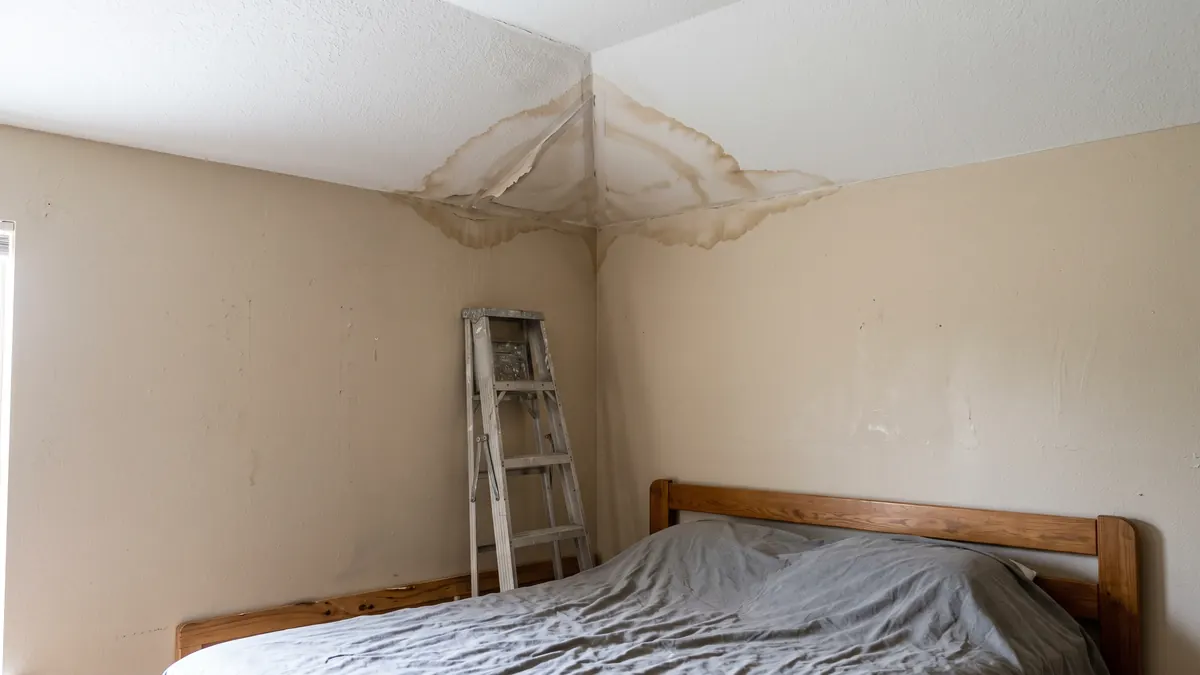
Water on your ceiling never started there. It traveled down from the roof, a pipe, the AC system, or water that’s still sitting somewhere overhead. Each of those has its own first call.
Call a roofer if the stain only shows up after rain
A ceiling stain tied to weather is usually roof-related. It shows up during a storm, or a day or two after one. Then it stays put or fades slowly between rain events. A missing shingle, a cracked flashing seal, or recent hail damage can all let water in above the attic insulation. It can sit there a long while before it ever reaches drywall you can see.
Call a plumber if a bathroom or drain line sits above that spot
If the stain shows up on a random Tuesday with no rain in sight, look at what’s directly overhead. A second-floor bathroom, a kitchen drain line, or a supply line running through the attic can all fail without any connection to weather. This kind of leak often gets worse gradually, a slow drip instead of a sudden soak.
Call an HVAC company if the room sits under a vent or air handler
Ceiling damage that only shows up during the cooling months usually traces back to the AC system, not the roof or the plumbing. The ac condensate guide diagrams how a clogged drain line backs water up into the pan. Once it spills over the edge, it soaks the insulation above your ceiling.
Call this line if water is still moving up there
If water is still active somewhere above the ceiling, whatever the original cause, the drying side of the job belongs here. A ceiling that stays wet keeps spreading. Figuring out how far it traveled usually needs a real look at the space, not another guess from underneath it. If a recent storm is behind it, the storm damage cleanup page takes stock of what wind-driven rain can push past a roof before a stain ever shows.
A bulge means don’t wait
A dry, unchanged stain usually means the leak already stopped days ago. A bulge or soft spot means water is still sitting up there right now. It’s held by drywall or texture that’s about to give. Keep people and furniture clear of that spot, and resist the urge to press on it. Treat it as active until someone’s confirmed otherwise.
Dry in place or come down
Wet time and sag decide the fate of a ceiling section. Drywall that dried while still flat can often stay. A panel that droops, crumbles, or has spent days damp comes out. The water damage repair page details what happens to drywall once a section gets cut out, or gets dried where it sits.
What insurance usually asks
Most policies treat a sudden failure, a pipe that lets go without warning, differently than damage that built up slowly over months. Coverage depends on your specific policy and how the water got there. A direct question to your carrier beats a guess.
A ceiling never causes its own damage
Everything a ceiling shows you is a report, not the source. The roof, a pipe, or the AC did the actual damage. The tree above tells you which one to call first. The fourth branch, the one where water’s still moving, only has one number on it. Call before it grows into a fifth problem.
Common questions
Can I just repaint over a ceiling stain?
Paint covers the color, but it doesn't tell you whether the space above is still wet. Painting over an active leak usually means doing the job twice, once now and once after the real source gets found.
Is it safe to poke a bulging spot myself?
Not usually. A bulge means water is pooled behind the drywall or texture, and releasing it wrong can send it somewhere worse, or onto you. Keep the area clear and get someone to look at it before anyone pokes anything.
How do I know whether to call a roofer, a plumber, or an HVAC company first?
Weather is the fastest clue. A stain that only shows up during or after rain usually points to the roof. One that shows up any day, rain or not, usually points to a pipe or the AC system, depending on what sits above that spot.
Does homeowners insurance cover ceiling water damage?
Sometimes, and it depends on what caused it and how fast it happened. Many policies treat a sudden pipe failure differently than water that seeped in slowly over months, so check your policy or ask your carrier about your specific situation.
Related pages
Appliance Leak Cleanup
Replacing the tank is a plumber's job. Everything the water reached before that happened is a different call.
Learn more →Burst pipe cleanup
A burst pipe can be a 1960s original line, 1980s copper, or newer PEX, and each one behaves a little differently.
Learn more →Commercial Water Damage
Four different people might spot the same wet floor first, and the response shouldn't depend on which one it is.
Learn more →Emergency Water Removal
Four pieces of equipment, run in order, decide what a wet house looks like a week from now.
Learn more →Talk to a local pro now
We answer 24/7. One call gets a Irving crew moving on your water damage, with a free estimate and help with your insurance claim.
Get Help Now(972) 210-0384Free estimates. No obligation to hire.